Your oxygen equipment works well at home. But a workday looks different. There’s the commute, the walk from the parking lot, and possibly a full shift away from an outlet. If you’re getting ready to go back, the question isn’t just whether you can bring oxygen to work. It’s whether your setup will work for the whole day.
Short answer: Yes, some people can keep working or return to work while using prescribed supplemental oxygen. Whether it’s appropriate for you depends on your health, your oxygen prescription, what the job requires, and where you do it. Before your first shift, review your actual duties with your healthcare team and confirm your equipment and backup plan with your oxygen supplier.
Start With What You Actually Do at Work
“I work in an office” might mean sitting at a desk most of the day. It might also mean walking between buildings, taking the stairs, or carrying equipment to meetings. When you talk to your healthcare team, describe those tasks rather than just giving your job title. Include the commute, too.
The American Thoracic Society’s patient guide to oxygen therapy explains that oxygen needs can differ at rest and during activity. If you’re considering a portable unit, ask your healthcare team whether your oxygen level should be assessed with that specific device while you’re both resting and active. A setup that meets your needs while seated may not meet them while walking or lifting.
| Your workday | What to check before returning |
|---|---|
| Desk work, office, or remote work | Where the unit will sit, whether an appropriate outlet is available, and how to keep tubing out of walkways. |
| Retail, hospitality, or a job on your feet | How far you walk, how long you stand, whether you can take breaks, and how you’ll carry or move the equipment. |
| Warehouse, field, or physically demanding work | Stairs, lifting, long routes, vehicle travel, and whether there is a way to get help or access backup oxygen if the unit stops. |
| Commercial kitchen, welding, or other hot work | Have workplace safety staff and your healthcare team review the specific tasks before returning. Don’t assume a smaller device or a longer tube makes work near ignition sources safe. |
Keep the person using oxygen away from ignition sources, not just the machine. Oxygen helps fires burn more easily and rapidly. Putting the concentrator in another room does not make it safe to wear a cannula near a lit gas burner, flames, or sparks. Don’t skip prescribed oxygen to get through a task. See the American Lung Association’s oxygen safety guidance and our guide to what to avoid near an oxygen concentrator.
Can You Use a Portable Oxygen Concentrator at Work?
A portable oxygen concentrator can be an option if the device meets your prescription during the activities you’ll do at work. Portability tells you how easy the unit is to carry. It doesn’t tell you whether the unit delivers oxygen in the mode or amount you need.
- Continuous flow delivers oxygen at a steady rate and is generally expressed in liters per minute (L/min).
- Pulse dose delivers a burst of oxygen when the device detects an inhalation. A pulse setting of 2 is not the same as 2 L/min of continuous flow.
If you use a stationary concentrator at home, don’t switch to a portable unit by matching the number on the display. Ask your healthcare team to confirm the delivery mode and setting for the exact model you plan to use. The American Lung Association’s portable concentrator guide explains the difference and why you should check the setting with your care team.
Think about how you’ll move between places, too. A plug-in setup at a desk doesn’t cover the walk from the car or a meeting in another building. If your plan involves more than one oxygen source, ask your supplier to show you how to switch between them as directed.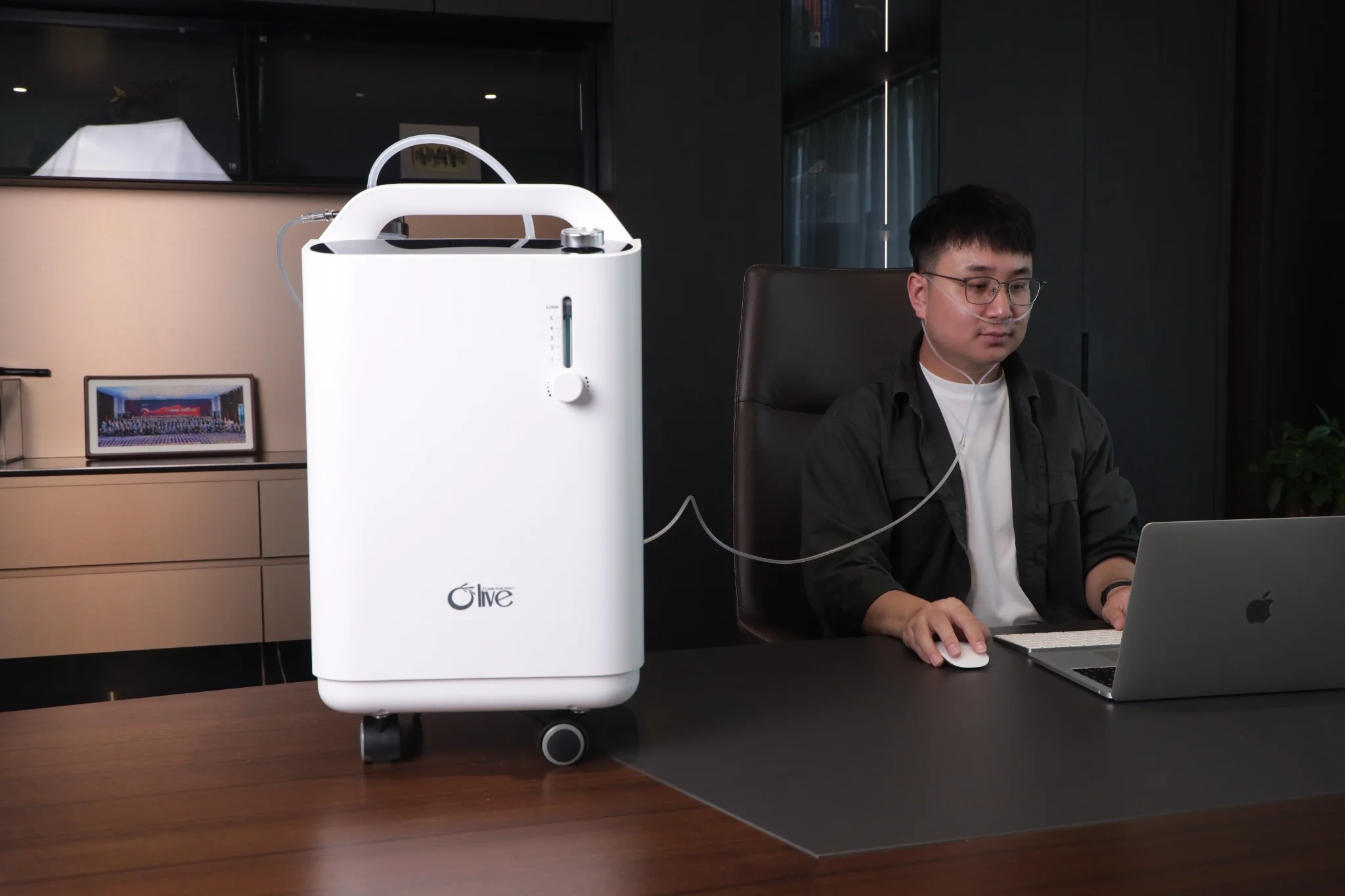
Plan for the Commute, the Shift, and the Trip Home
An eight-hour shift doesn’t necessarily mean you need just eight hours of oxygen away from home. For example, if you need oxygen throughout the day, an eight-hour shift plus 45 minutes each way adds up to 9.5 hours away from your home setup before any delays. That’s a planning example, not a universal battery requirement: reliable power at your workstation and your own oxygen schedule affect how much battery time you’ll need.
- Ask for runtime at your prescribed setting. Don’t use the longest runtime in a brochure as your estimate. Ask about your model, battery configuration, and prescribed setting.
- Confirm where and how you can plug in. Check the outlet location with your workplace and ask your supplier which power accessories are approved. Verify whether your model can operate and recharge at the same time.
- Know your backup plan before the first shift. Ask what to do if a battery runs low, the power goes out, or the device alarms. Know where your prescribed backup supply will be, if your care plan calls for one, and who to contact.
If an alarm sounds, follow the manual for your model and your backup plan. Our oxygen concentrator alarm and warning-light guide explains common alert categories; it doesn’t replace the instructions for your device. If you have severe trouble breathing, seek emergency help instead of delaying to troubleshoot the machine.
What Should You Discuss With Your Employer?
You don’t have to start with a long explanation of your medical history. Start with a practical question: “I use prescribed oxygen. Can we go over where the equipment would go, which tasks need a safety review, and what I should do if the power goes out?”
Depending on your job, it may help to talk with your manager, HR, or occupational health and safety team about:
- A workstation near an appropriate outlet, with enough space for the equipment and a clear route for foot traffic.
- Breaks or a phased return if a full shift is not a suitable starting point.
- Reducing unnecessary trips between work areas or moving frequently used supplies closer.
- How to handle power failures, equipment alarms, and emergency evacuation.
For U.S. readers, the Job Accommodation Network’s guidance on respiratory limitations gives examples of workstation and schedule adjustments. These are options to discuss, not automatic entitlements or a substitute for a site-specific safety review.
Your First-Shift Oxygen Checklist
- Healthcare team: Review your commute and most demanding duties. Confirm when you should use oxygen, the prescribed settings, and what to do if symptoms change.
- Oxygen supplier: Confirm that the exact device supports your prescribed mode, check expected runtime, and review alarms and backup arrangements.
- Workplace: Confirm where the unit can go, how power and tubing will be managed, and whether any tasks require a safety review before you return.
- You or your caregiver: Keep your care team’s and supplier’s contact details accessible. Check your approved power supplies and any prescribed backup before leaving.
Frequently Asked Questions
Can I work a full shift while using oxygen?
Some people can, but a full shift isn’t the right starting point for everyone. Review the duration, physical demands, and commute with your healthcare team. If needed, discuss a phased return, different duties, or breaks with your workplace.
Can I use my home oxygen concentrator at my desk?
Ask your oxygen supplier and workplace before moving your home unit. Check whether it is suitable for the proposed setup, where it can be plugged in and ventilated, and how you’ll receive prescribed oxygen during the commute and away from your desk.
Can I turn up my oxygen if I get short of breath at work?
Don’t adjust your oxygen on your own. Follow the instructions your clinician gave you for activity and symptoms. If your usual work tasks leave you more breathless than expected, tell your healthcare team. If breathing becomes severely difficult, seek emergency help.
Does the battery rating tell me whether my concentrator will last all day?
Not by itself. Ask your supplier for expected runtime at your prescribed setting and confirm when you’ll have access to approved power. Include the commute, time away from your workstation, and potential delays.
Before You Go Back
Start with the hardest part of your workday, not the easiest. If it’s the walk from the bus stop, the storeroom stairs, or a task near an open flame, bring that example to the right people before your first shift. Your healthcare team can review your oxygen needs, your supplier can confirm what the equipment can deliver, and your workplace can assess the conditions in which you’ll use it.
For Homecare Providers and Equipment Distributors
Comparing concentrators for users who need oxygen away from home? Ask OLIVE for model-specific information on delivery modes, battery options, and approved power accessories.
Request Model SpecificationsThis article is for general education. It does not determine whether you are fit for work, recommend an individual oxygen setting, or replace your clinician’s instructions or a workplace safety assessment.